
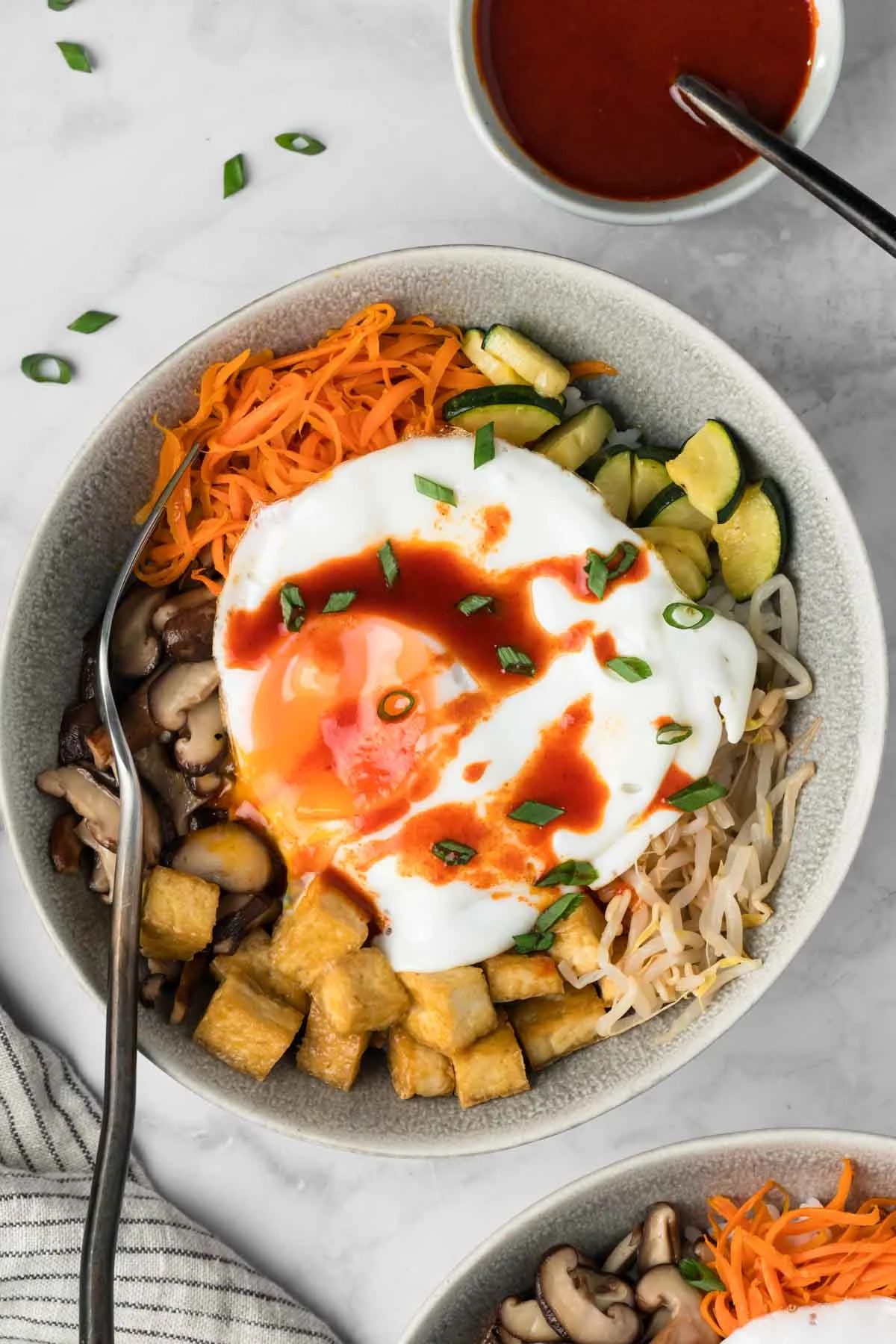
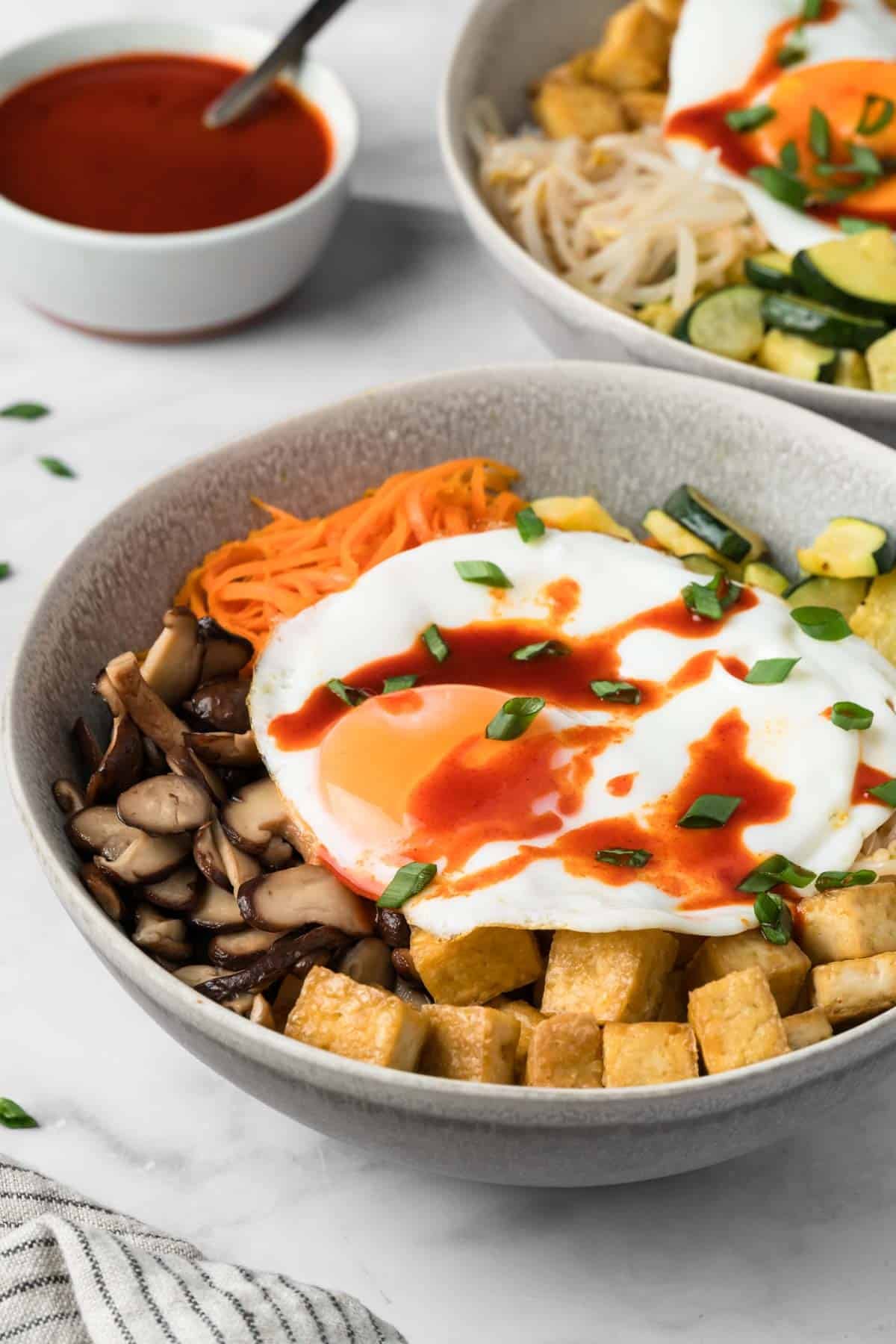
This Tofu Bibimbap bowl tops white rice with crispy fried tofu, sautéed vegetables, and a jammy fried egg. Doused in a bold gochujang sauce, every bite of this Korean-inspired rice bowl is bursting with flavor!
Why you’ll love this recipe!

The best rice bowl – This vegetarian bibimbap bowl is loaded with colorful veggies, shiitake mushrooms, meaty fried tofu cubes, and a runny fried egg. It’s the rice bowl of my dreams!
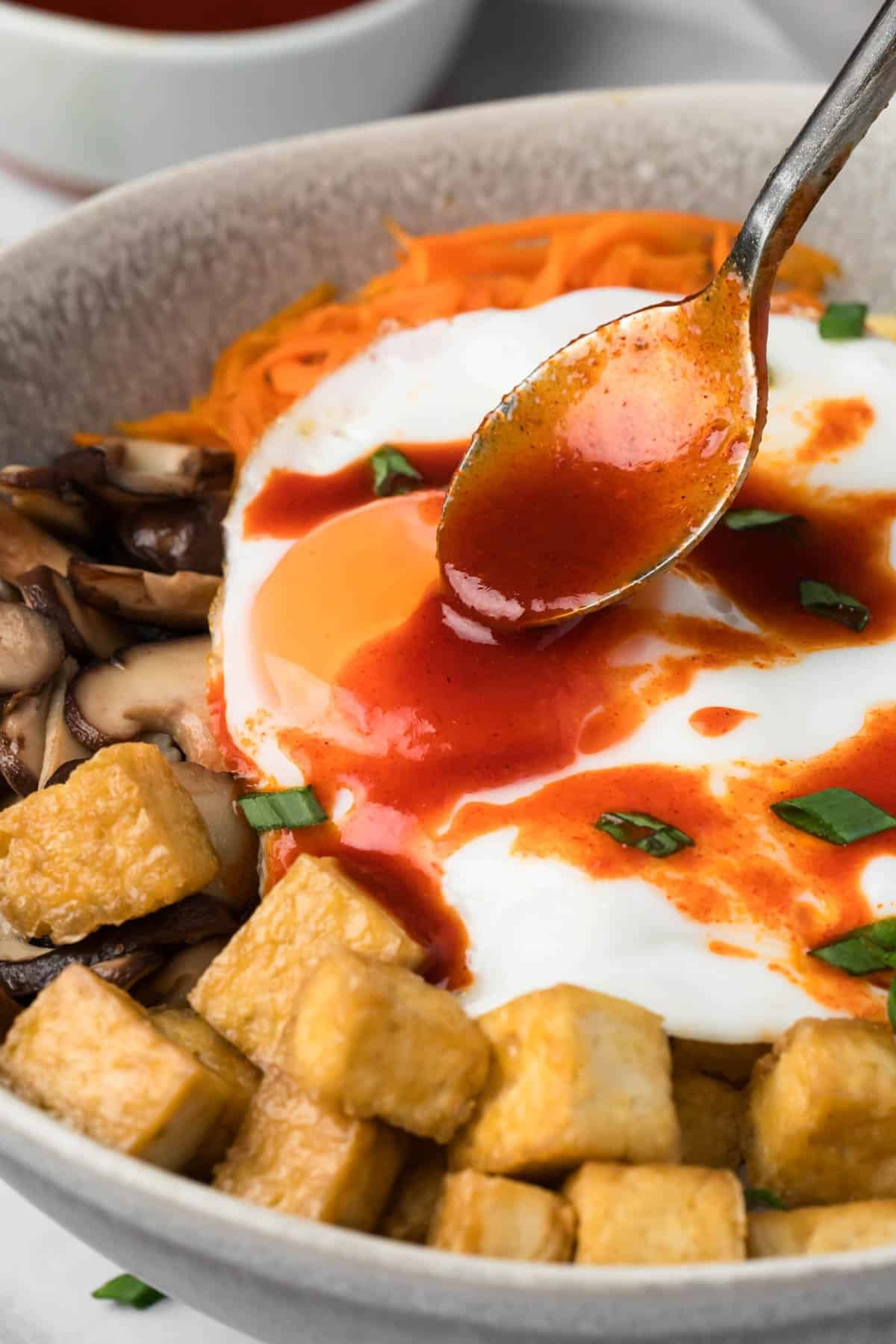
That sauce though 🌶️ – I could almost drink the gochujang sauce with a spoon. It has all the flavors I want in a great rice bowl sauce: spicy, tangy, and a little sweet.
Change it up – Bibimbap is known for being versatile, and my recipe is no different. You have total control over what goes into this vegetarian bowl. Change the vegetables, ditch the egg, or swap the tofu—it’s up to you!
There’s a Korean restaurant 5 minutes away from us that makes excellent bibimbap. I was so impressed that it actually inspired my Hawaiian bibimbap recipe and this vegetarian bibimbap with tofu! Once you try this Korean mixed rice bowl, you may never go back to average rice bowls again.
To make bibimbap with tofu, I topped fluffy white rice with crispy pan-fried tofu, shiitake mushrooms, sautéed veggies, and a fried egg, then finished it with a healthy drizzle of gochujang sauce. Talk about a complete meal! It’s one of my favorite healthy dinners and make-ahead lunches.
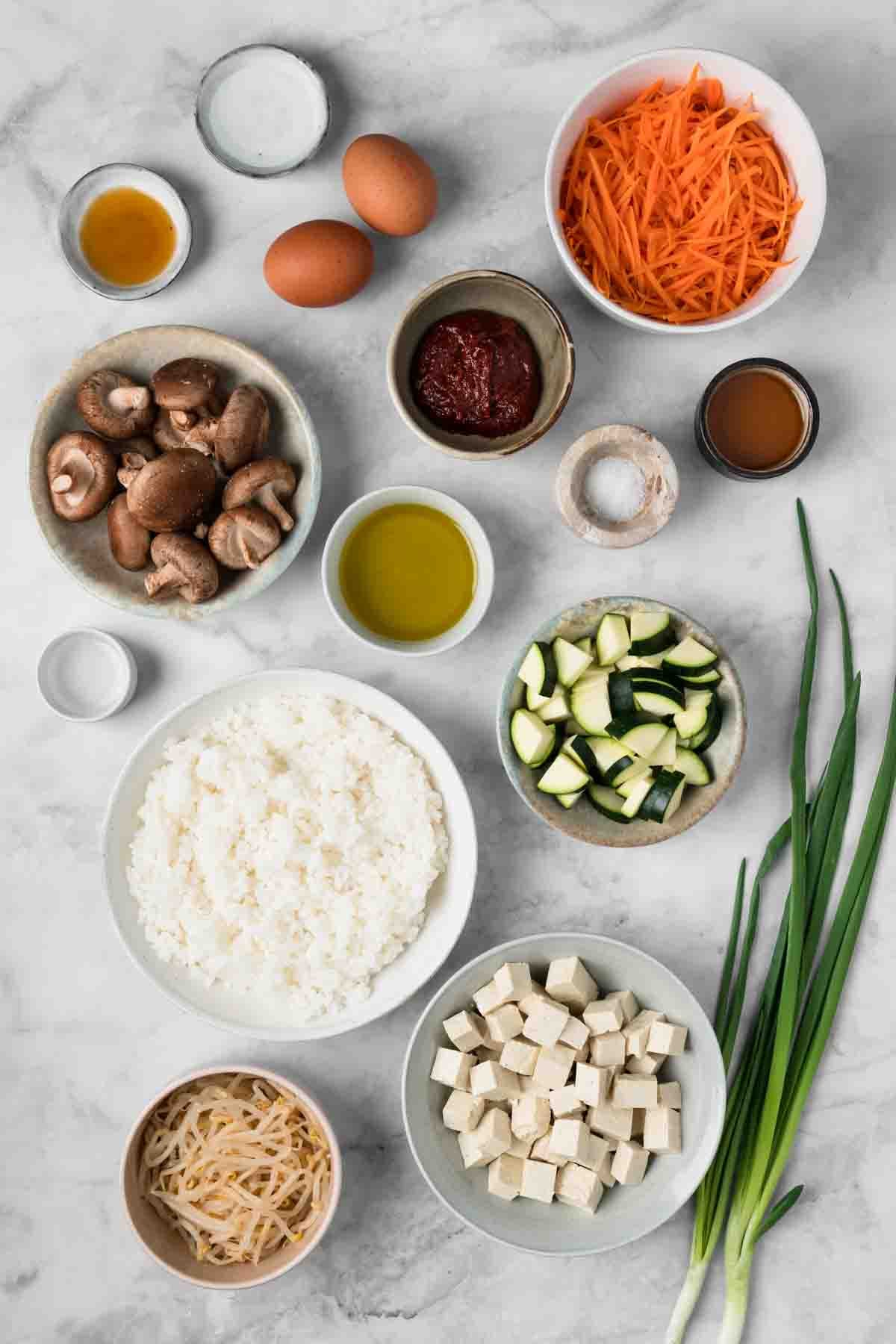
Tofu Bibimbap Ingredients
Rice – I used fluffy short grain white rice as the base. Feel free to use brown rice, quinoa, cauliflower rice, or sweet potato noodles as a substitute.
Mushrooms – Shiitake mushrooms are a must! They give the bowl a delicious boost of umami.
Tofu – I like frying super firm tofu, but extra firm tofu works just as well.
Eggs – Fried eggs are a classic topping on bibimbap. I like to keep the yolk runny; watching it spill into the tofu rice bowl instantly makes my mouth water.
Bibimbap sauce – I topped the bowls with a fiery red sauce made from gochujang (Korean fermented chili paste), sesame oil, maple syrup, water, rice vinegar, and salt. I recommend doubling it and drizzling the extras over my vegan bibimbap and this tofu coconut rice bowl.
This list is to provide further clarification on a few of the ingredients. See recipe card below for the full ingredient list.
Variations
- Baked tofu variation – If you don’t want to use as much oil, you can make this with my baked tofu recipe or my air fryer tofu recipe instead.
- Vegan bibimbap – Just omit the egg to make a vegan rice bowl.
- Gluten-free option – Keep in mind that gochujang is not gluten-free. If you need this recipe to be gluten-free, make the sauce with a gluten-free chili paste or hot sauce instead.
- Gochujang substitute – If you can’t find gochujang at your local Asian grocery store, you can use another Korean chili paste or sriracha instead.
How to Make Tofu Bibimbap
Step 1: Cook the rice. If you haven’t already, cook the rice.
Step 2: Cook the vegetables. Meanwhile, sauté the mushrooms in a skillet until soft, then transfer them to a bowl. Cook the zucchini in the empty pan, then transfer it to a separate bowl. Repeat the same process with the carrots.
Step 3: Fry the tofu. Add more oil to the empty skillet, then add the tofu. Fry the cubes until all sides are golden and crispy.
Step 4: Make the sauce. Whisk the sauce ingredients together in a small bowl.
Step 5: Fry the eggs. Crack the eggs into the skillet and fry until the whites are set but the yolks are still runny.
Step 6: Assemble and serve. Divide the rice between bowls, then top with the vegetables, cooked tofu, and a fried egg. Drizzle some of the sauce over the top and garnish with green onions. Enjoy!
Erin’s Tips and Tricks
- I recommend pressing the block of tofu for 20 to 30 minutes before frying. Removing this excess water makes the cubes extra meaty and tender.
- Leave the tofu cubes alone while they’re frying. This gives them a better chance of turning crispy and golden brown on each side.
- I know that cooking the vegetables separately takes more time, but it’s the key to tender, evenly cooked veggies.
- Make the sauce with a little bit of gochujang to start, then add more to taste
My Pro Tip
More Topping Ideas
The best thing about bibimbap is that you can make it with pretty much any cooked or raw vegetables you like! Feel free to top your bowl with even more veggies, like:
- Kimchi
- Sautéed bell peppers
- Shredded cabbage
- Chopped leafy greens
- Air fryer sweet potatoes
- Pickled red onions
- Sliced cucumbers
Tofu Bibimbap FAQs
Bibimbap (비빔밥), meaning “mixed rice” in Korean, is a hot Korean rice bowl made with a variety of vegetables, meat, and a fried egg. It’s traditionally made with minced beef, but it’s honestly so good with all kinds of proteins, like tofu, pork, and chicken.
It does pack a punch, yes! That’s why I recommend starting with a little bit of gochujang (maybe 2 tablespoons), then adding more to taste.
Storage
Make-ahead: This is a perfect make-ahead meal! Make the sauce, cook the rice, and cook all of the toppings (except the egg), then store them in separate airtight containers in the fridge. Just reheat the components, assemble them in a bowl, and top with a freshly fried egg.
Refrigerator: Store any leftovers in a sealed container in the fridge for 3 to 4 days.
Reheating: Reheat the rice in the microwave and the cooked veggies and tofu in a skillet over medium heat until they’re slightly crisp and warmed through.
More Rice Bowl Recipes
If you made this recipe, be sure to leave a comment and star rating below. Thanks!
-
If you haven’t already, cook the rice according to the package instructions.
-
Next, heat 1 tablespoon of olive oil in a skillet over medium heat, then add the mushrooms and sauté until soft, about 5 minutes; transfer to a small bowl.
-
To that same skillet, add the zucchini and again, sauté until softened, adding more oil as needed. Transfer to a separate bowl.
-
Last, repeat this same process with the carrots, sautéing until soft, then transfer to a third bowl.
-
Wipe out the skillet with a paper towel, then add 2 tablespoons of olive oil. While the oil is heating up, slice the tofu into bite-size cubes and sprinkle them with salt.
-
Add the tofu to the skillet and cook until all sides are crispy. Alternatively, if you don’t want to use as much oil, you can use my baked tofu recipe instead.
-
Next, make the sauce: whisk the gochujang, sesame oil, maple syrup, water, rice vinegar, and salt together in a small bowl or glass measuring cup.
-
Last, crack the eggs into the skillet and cook for a few minutes. Ideally, you want the yolks to still be runny.
-
Assemble the bowls: Divide the rice amongst 2 bowls, then add the vegetables, along with the bean sprouts and cooked tofu. Top each bowl with 1 fried egg, then drizzle some of the sauce on top. I suggest starting with a little and then adding more sauce to taste. Last, sprinkle with green onions and enjoy!
*Calories are per serving and are an estimation
Calories: 878kcal | Carbohydrates: 95g | Protein: 34g | Fat: 42g | Saturated Fat: 7g | Polyunsaturated Fat: 12g | Monounsaturated Fat: 22g | Trans Fat: 0.01g | Cholesterol: 164mg | Sodium: 491mg | Potassium: 1208mg | Fiber: 10g | Sugar: 29g | Vitamin A: 18216IU | Vitamin C: 38mg | Calcium: 386mg | Iron: 6mg