
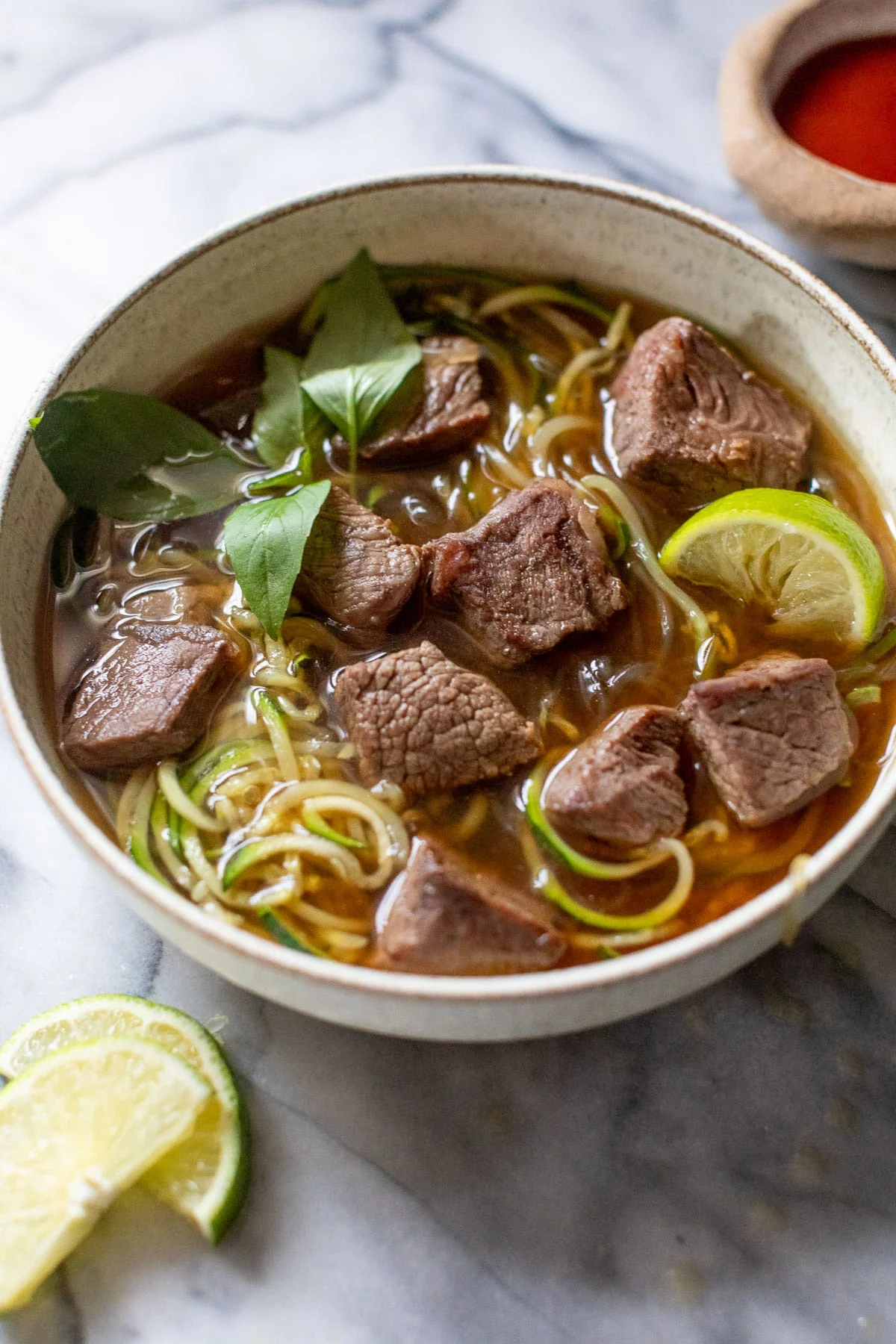
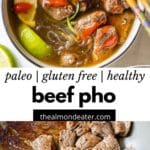
There’s nothing quite as comforting as a piping hot bowl of Paleo Beef Pho. This Vietnamese-inspired noodle soup is quick and easy to make with grain-free noodles, seared beef, and a just-plain-delicious broth.

Why you’ll love this recipe!

So. Much. Flavor! Thanks to an aromatic, umami-forward broth and tender seared beef, this homemade beef pho tastes like it came from your favorite Vietnamese spot.
Gluten & grain-free – Zucchini noodles and kelp noodles ensure that this beef pho recipe is not only paleo-friendly but also 100% gluten-free.
Lots of leftovers – This recipe makes enough pho for between 2 and 4 people, so you’re bound to end up with leftovers (I love leftovers!).
Pho (pronounced “fuh,” not “faux”) is a beloved Vietnamese noodle soup that I crave at least once a week. Along with my Whole30 banh mi bowl, this Paleo Beef Pho has saved me from ordering takeout many times, thanks to its deeply savory, slow-simmered broth, fragrant herbs, tender slices of beef, and slurpable noodles.
Traditionally, pho is far from being paleo and Whole30-friendly since it’s made with rice noodles. But by simply trading rice noodles for a combination of kelp noodles and spiralized zucchini, we can enjoy a soup that’s just as satisfying and completely grain-free. And no, you don’t have to be paleo or Whole30 to enjoy it!

Paleo Beef Pho Ingredients
Beef – I always use pre-cut beef (usually labeled as “beef stew meat”) simply because it’s more convenient.
Warm spices – The pho broth has warm, complex notes thanks to a cinnamon stick, whole cloves, and star anise. Always stick with whole spices rather than ground spices, as they’re easier to strain out of the broth.
Beef broth – I love using my homemade beef bone broth in pho for the extra protein and collagen. Store-bought beef broth works just as well, though.
Zoodles – AKA zucchini noodles! If you don’t have a spiralizer to make the zoodles yourself, pick up prepackaged zucchini noodles from the produce section at your local grocery store.
Kelp noodles – These keep the dish paleo and satisfying (much more so than if you were to use zoodles alone). You should be able to find these in the Asian foods aisle of most well-stocked grocery stores.
Toppings – A bowl of pho just isn’t complete without the fresh garnishes. Thai basil leaves, fresh mint, lime juice or wedges, and a drizzle of sriracha are all classics.
This list is to provide further clarification on a few of the ingredients. See recipe card below for the full ingredient list.
Variations
- Switch up the beef – You’re more than welcome to use your favorite cut of beef here. Swap the stew meat for well-done beef brisket (gầu), flank (nạm), or paper-thin slices of raw eye round, sirloin, or ribeye (phở tái).
- Swap the noodles – The zoodles can easily be replaced with spiralized sweet potato, carrot, celeriac, turnip, or daikon radish (basically any veggie that won’t turn to mush in hot broth). Keto-friendly shirataki noodles are also a good option.
- Add flavor boosters – You can add a lot of extra flavor to the broth by adding toasted coriander seeds, fennel seeds, black cardamom, black peppercorns, or a lightly bruised stalk of lemongrass.
How to Make Paleo Beef Pho
Step 1: Broil the aromatics. Arrange the onion and ginger on a baking sheet and broil until they’re lightly charred around the edges.

Step 2: Bloom the spices. Meanwhile, toast the cinnamon stick, cloves, and star anise in a large saucepan until fragrant.
Step 3: Build the broth. Transfer the broiled onion and ginger to the saucepan with the spices, then add the fish sauce, beef broth, and water. Gently simmer for 10 to 15 minutes.

Step 4: Sear the beef. While the broth simmers, quickly sear each piece of beef in a hot skillet.
Step 5: Prepare the noodles. Cook the kelp noodles according to the package instructions and spiralize the zucchini. When the kelp noodles are nearly tender, add the zucchini noodles to the same pot and cook until softened. Stain and set aside.
Step 6: Strain the broth. Strain the broth through a fine-mesh strainer and into a bowl.
Step 7: Assemble and serve. Divide the cooked noodles among bowls, top with the seared beef, and ladle the hot broth over top. Finish with your favorite pho toppings, then enjoy!
Erin’s Tips and Tricks
- Don’t burn the aromatics under the broiler. You want them to be golden and lightly charred, not deeply browned.
- Straining the broth is non-negotiable. A truly great bowl of pho starts with a clear, fragrant broth—you don’t want any of those aromatics and whole spices floating around.
- Both the kelp noodles and the zucchini noodles don’t take long to cook. By the time they’re done, the noodles should be tender with a slight bite and never soggy.
My Pro Tip
Piping Hot Broth
The secret to restaurant-quality pho broth is to keep it at a gentle simmer on the stove. The only time you’re going to crank up the heat is right before you strain it. This way, the broth will be hot enough to keep the seared beef warm or to finish cooking any thin beef slices.
Beef Pho FAQs
Sure. Start by broiling the onion and ginger in the oven as normal, then sear the beef in the Instant Pot using Sauté mode. Once browned, transfer the beef to a plate, then add the whole spices and toast until fragrant.
Next, pour the liquids into the pot, seal the lid, and cook on high pressure for 20 minutes, followed by at least 10 minutes of natural pressure release. Prepare the noodles separately to keep them from turning soggy. Finish by straining the broth and assembling the bowls as usual.
A bowl of beef pho is perfect for fun weekend dinners or when you want to go all out for lunch. It’s traditionally served with lots of gorgeous fresh toppings, which I like to keep pretty simple. I’ll usually opt for some Thai basil, lime wedges, and sriracha, but there’s room for even more if you want, like bean sprouts, cilantro, mint, sliced jalapeños, or scallions.
Storage
Make ahead: You can easily get a jump on this recipe by making the broth, cooking the kelp noodles, spiralizing the zucchini, and searing the beef a few days in advance.
Refrigerator: I recommend storing the broth, noodles, and beef in separate airtight containers for the best textures and flavors. Everything will stay fresh for 3 to 5 days this way.

More Paleo & Whole30 Recipes
If you made this recipe, be sure to leave a comment and star rating below. Thanks!
-
Place onion and ginger on a baking sheet and broil on high for 5 minutes or so, or until onions start turning slightly golden.
-
While they’re broiling, place cinnamon, cloves and star anise in a large saucepan and heat over medium-high.
-
Transfer broiled ginger and onion to saucepan; add fish sauce, beef broth, and water and bring to a boil; reduce to a simmer and simmer for 10-15 minutes.
-
Meanwhile, place beef, salt and pepper in a skillet and cook beef for 2 minutes per side.
-
While beef is cooking, make the kelp noodles according to instructions on the package, and spiralize the zucchini. Once kelp noodles are almost cooked, add zucchini noodles to pot and cook for 2-3 minutes. You want the noodles to be softer, but not soggy.
-
At this point. strain the broth through a fine mesh strainer, removing all of the “chunks” and stuff.
-
Strain the noodles and place into a bowl (or bowls). Add beef to bowls and then pour strained broth overtop. Add toppings and enjoy!
*To prep ahead: spiralize the zucchini, cook the kelp noodles, cook the beef; then, store them separately in sealed containers until you’re ready to use.
Calories: 651kcal | Carbohydrates: 9g | Protein: 46g | Fat: 47g | Saturated Fat: 18g | Polyunsaturated Fat: 1g | Monounsaturated Fat: 20g | Trans Fat: 3g | Cholesterol: 161mg | Sodium: 3303mg | Potassium: 1014mg | Fiber: 3g | Sugar: 3g | Vitamin A: 12IU | Vitamin C: 4mg | Calcium: 272mg | Iron: 7mg
UPDATE NOTE: This post was originally published in December 2016. It was updated with new text and photos in January 2026.