
Both Dunkin’ and Starbucks recently added protein milk options to their menus, and if you assumed they were basically the same thing, you’d be wrong.
Starbucks first rolled out its protein menu at the end of 2025, and Dunkin’ quickly followed in January of 2026 because the world is completely protein-crazy at this point.
But these are two very different approaches to adding protein to your coffee, and it’s very important you see the differences if you’re chasing extra protein.
Let me break down what each chain is actually doing.
What Dunkin’ Uses: Lactaid 2% Protein Milk
Dunkin’ keeps it simple. They’re using Lactaid 2% Protein Milk, which is a pre-packaged product you can actually buy at the grocery store.
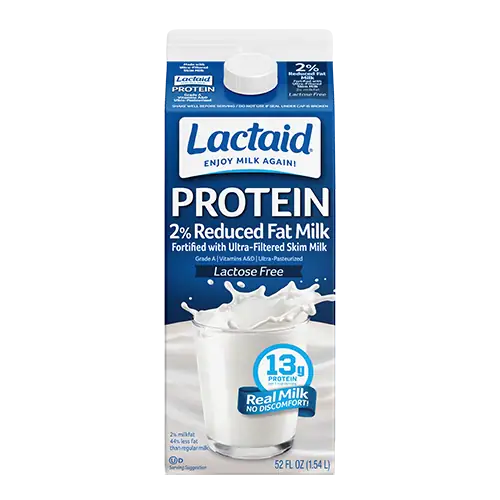
This makes the nutrition facts really straightforward. It’s ultra-filtered low-fat milk, and since it comes in a carton with a nutrition label, the macros are consistent across all stores.
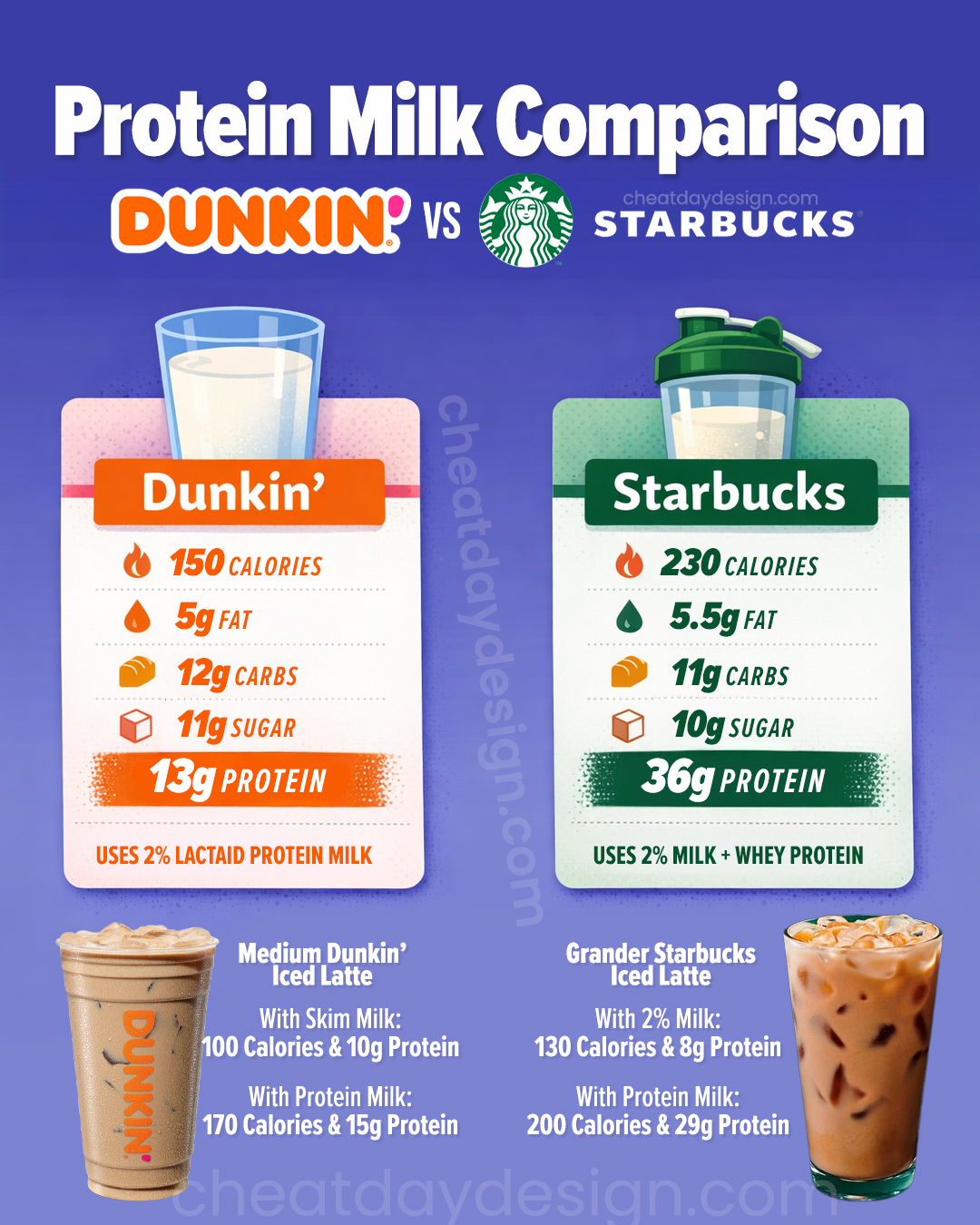
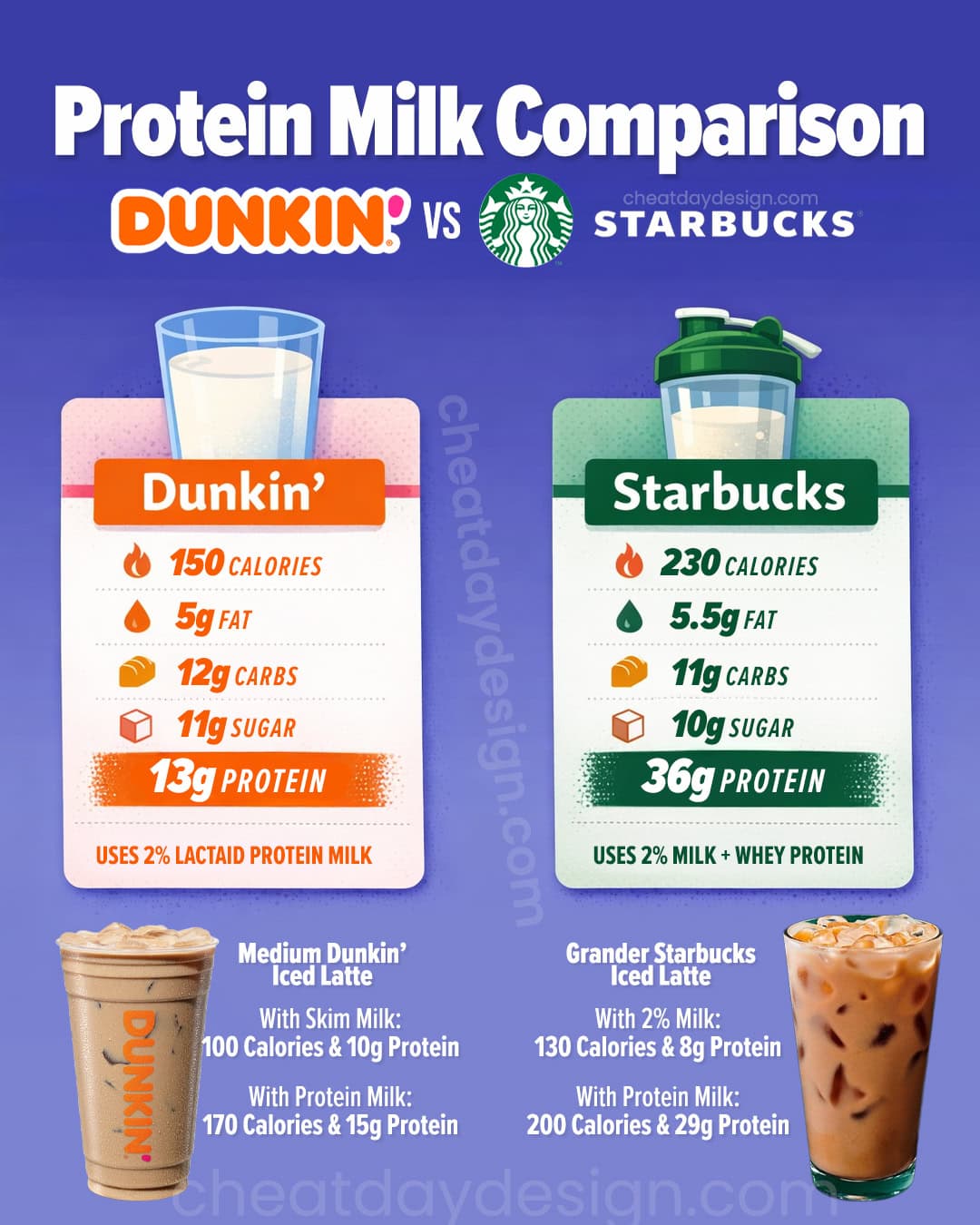
Per cup of Dunkin’ protein milk, you’re looking at:
- 150 calories
- 5g fat
- 12g carbs
- 11g sugar
- 13g protein
This is a very similar product to something like Fairlife, which drinks the same as regular milk. Ultra-processed simply means that they are able to filter out sugar and lactose, leaving more protein in the milk itself.
If you want to calculate the exact nutrition for your specific drink order using Dunkin’ protien milk, I built a Dunkin’ nutrition calculator that lets you customize everything.
What Starbucks Uses: 2% Milk + Whey Protein Blend
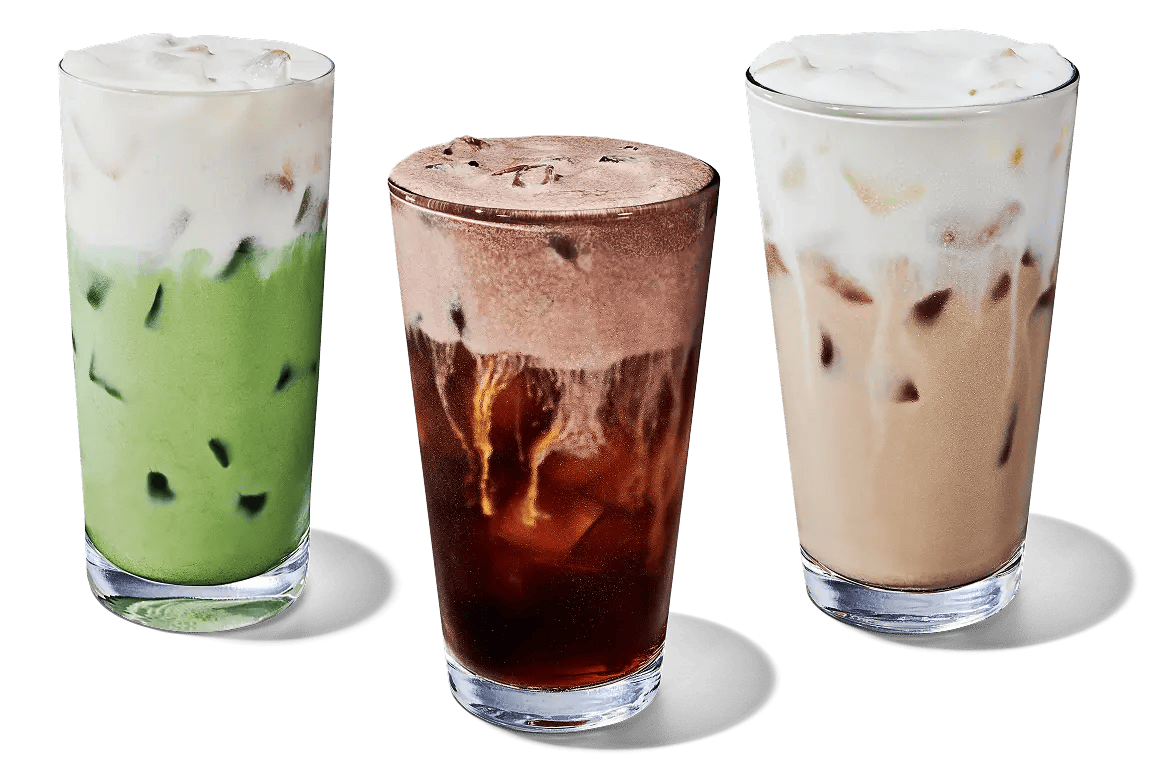
Starbucks took a completely different approach with the protein milk, leaning heavily into the “protein” portion. Instead of using a pre-made protein milk product, they’re blending 2% milk with whey protein powder in-store.
This means a couple of things:
First, the nutrition will vary slightly from drink to drink since it’s not a pre-packaged product with a fixed label. Baristas are manually adding the whey protein, so there’s natural variation.
Second, the protein content is significantly higher than Dunkin’s protein milk. Way higher.
Since the milk doesn’t come with a nutrition label, there aren’t definitive nutrition facts out there. Luckily for you, I went through all of Starbucks’ offerings and compared the protein items against the non-protein alternatives to deduce the approximate macros of Starbucks protein-boosted milk.
Don’t worry, it’s all included in my Starbucks nutrition calculator, so you can customize your favorite drinks with protein milk without doing any math.
Per cup of Starbucks protein milk, you’re looking at approximately:
- 230 calories
- 5.5g fat
- 11g carbs
- 10g sugar
- 36g protein
That’s nearly triple the protein of Dunkin’s option.
Side-by-Side Comparison
The difference becomes really obvious when you compare them directly.
For a medium iced latte:
- Dunkin’ with skim milk: 100 calories, 10g protein
- Dunkin’ with protein milk: 170 calories, 15g protein
- Starbucks with 2% milk: 120 calories, 8g protein
- Starbucks with protein milk: 200 calories, 29g protein
If you’re looking for the most protein possible, Starbucks is the clear winner. By swapping protein milk in your latte, you’re getting over 20 grams of extra protein.
At Dunkin’, swapping protein milk will only add 5 grams of protein.
The biggest tradeoff is the calories, with Starbucks coming with additional calories. But it’s not just about the numbers. The drinks themselves are going to taste and feel different, too…
The Protein Milk Drink Experience

Dunkin’s protein milk is going to taste and feel more like regular milk because, well, it is regular milk. If you’ve ever had Fairlife milk, or other ultra-filtered milk options, you’d never be able to taste the difference.
It’s smooth, it doesn’t change the coffee flavor much, and it blends in seamlessly.
Ironically enough, Dunkin’ doesn’t offer regular 2% milk, so if your only experience is using fat-free milk in your coffee, you may even find the protein milk experience more enjoyable.
Starbucks’ protein milk blend is thicker and richer because of the whey protein powder. If you’ve ever had a protein shake, you know that texture. Some people love it because it makes the drink feel more substantial. Others might find it a bit too thick or notice a slight protein powder taste.
It really comes down to what you’re looking for. If you want a normal coffee experience with a small protein boost, Dunkin’ is the move. If you want to turn your latte into a legitimate protein drink, Starbucks is the better option.
It’s worth noting that protein milk at Starbucks comes with an additional charge, which may sway your decision. At the time of writing this, my local Dunkin’ does not charge an additional fee for protein milk, but it will depend on your location.
Which Protein Milk Should You Choose?
There’s no wrong answer here. They’re just serving different purposes.
Dunkin’s protein milk is great if you want a slight upgrade to your normal order without changing anything about the drink itself. It’s a solid option for adding a bit more protein to your morning routine.
Starbucks’ protein milk is better if you’re actually trying to hit protein goals or replace a protein shake with your coffee. The 36g of protein per cup is no joke, but it does some with an additional cost and a flavor difference.
If you want to see exactly how these options change the nutrition of your go-to drink, check out my nutrition calculators for both Dunkin’ and Starbucks. You can customize every part of your order and see the breakdown.
Just remember that all the numbers are estimates. Both chains round and estimate their public nutrition facts, drinks are never made exactly the same way twice, and there’s always going to be some variation.
If you play with the calculators and notice some slight discrepancies, that is totally normal. But the calculators will get you very close to understanding what you’re actually consuming.
The main takeaway of all of this: Dunkin’ and Starbucks protein milks aren’t interchangeable products. One is ultra-filtered milk. The other is basically a protein shake disguised as a coffee additive.